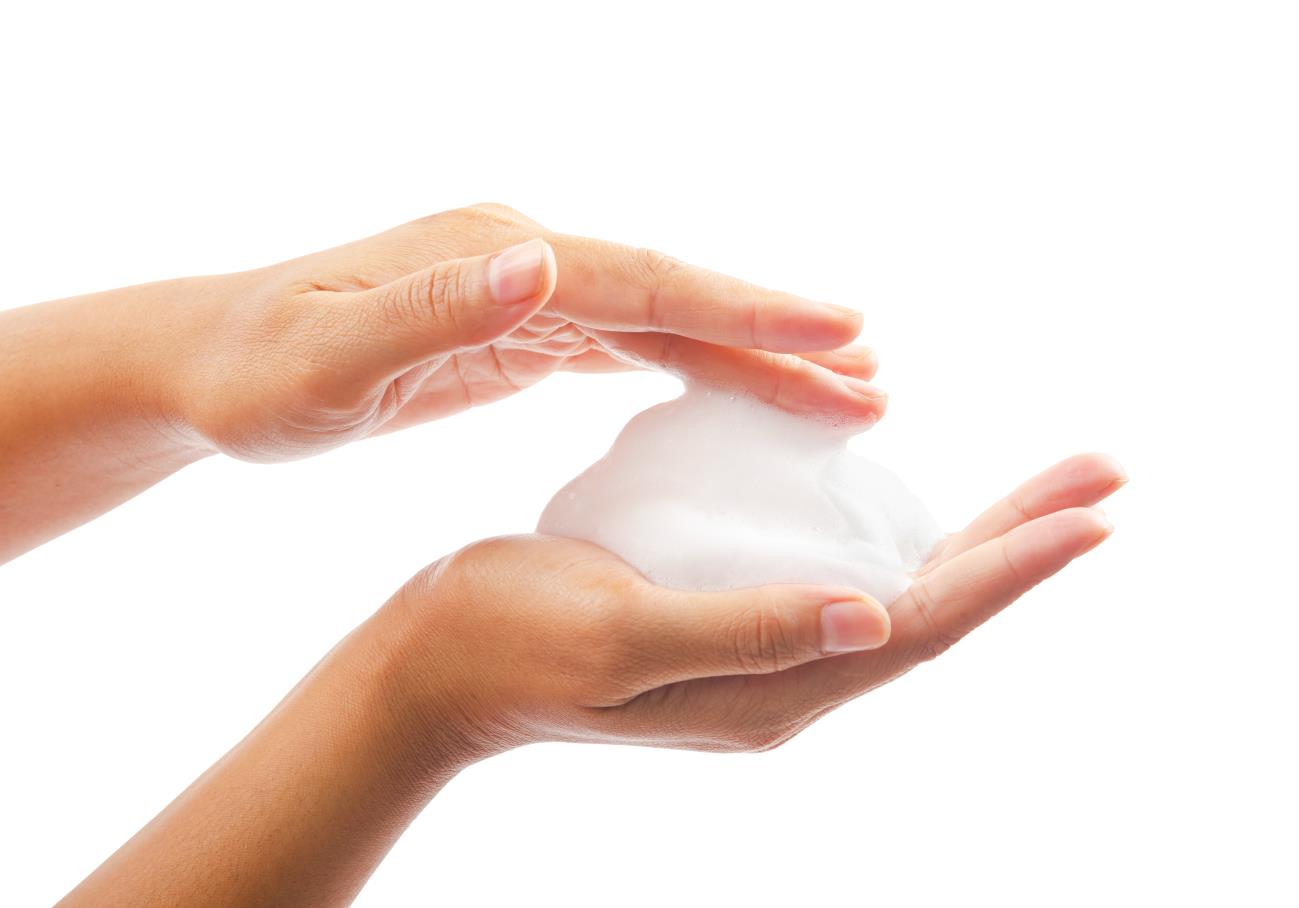
Cosmetic products such as shampoos, cleansers, and body washes represent some of the most frequently used formulations in personal care. Despite their maturity, this category is undergoing significant reformulation pressure driven by consumer expectations, sustainability requirements, and regulatory scrutiny from consumers and governments across the world.
Legacy surfactant systems are often not well aligned with these emerging demands, creating the need for new formulations built on alternative ingredient platforms. As a result, the next generation of products is being defined not only by functional performance, but also by ingredient origin, environmental impact, and overall safety profile.
Market Drivers & Growth
Cleansers, body washes, and shampoos represent a large and steadily growing segment of the global personal care market. The face wash and cleanser category alone is estimated at approximately $33 billion in 2025, while bath and body cleansing exceeds $39 billion, and the broader hair and scalp care market approaches $88 billion. Although these categories are mature, they continue to grow at roughly 6–7% annually, supported by sustained consumer demand and ongoing product innovation.
Despite this overall growth, the composition of the market is shifting more rapidly. Higher-growth subsegments such as sulfate-free shampoos and naturally derived cleansers are expanding faster than traditional products, reflecting a broader transition away from conventional surfactant systems. At the same time, the biosurfactants market is growing at a double-digit rate, highlighting the increasing importance of sustainable ingredient platforms.
This shift is being driven by several converging forces. Consumers are increasingly prioritizing ingredient transparency and avoiding materials such as sulfates, parabens, and petrochemical-derived components, while seeking bio-based alternatives. Sustainability has also become a core requirement, with growing emphasis on biodegradability, environmental impact, and regulatory compliance. In parallel, expectations around skin and scalp health have advanced, driving demand for milder, pH-balanced formulations that support barrier function and reduce irritation.
Despite these changes, performance expectations remain unchanged. Consumers still expect strong cleansing, rich foam, and desirable sensory properties. Many alternative surfactant systems do not inherently match the rheology, foam, and stability of legacy formulations, increasing reformulation complexity.
The Core Change
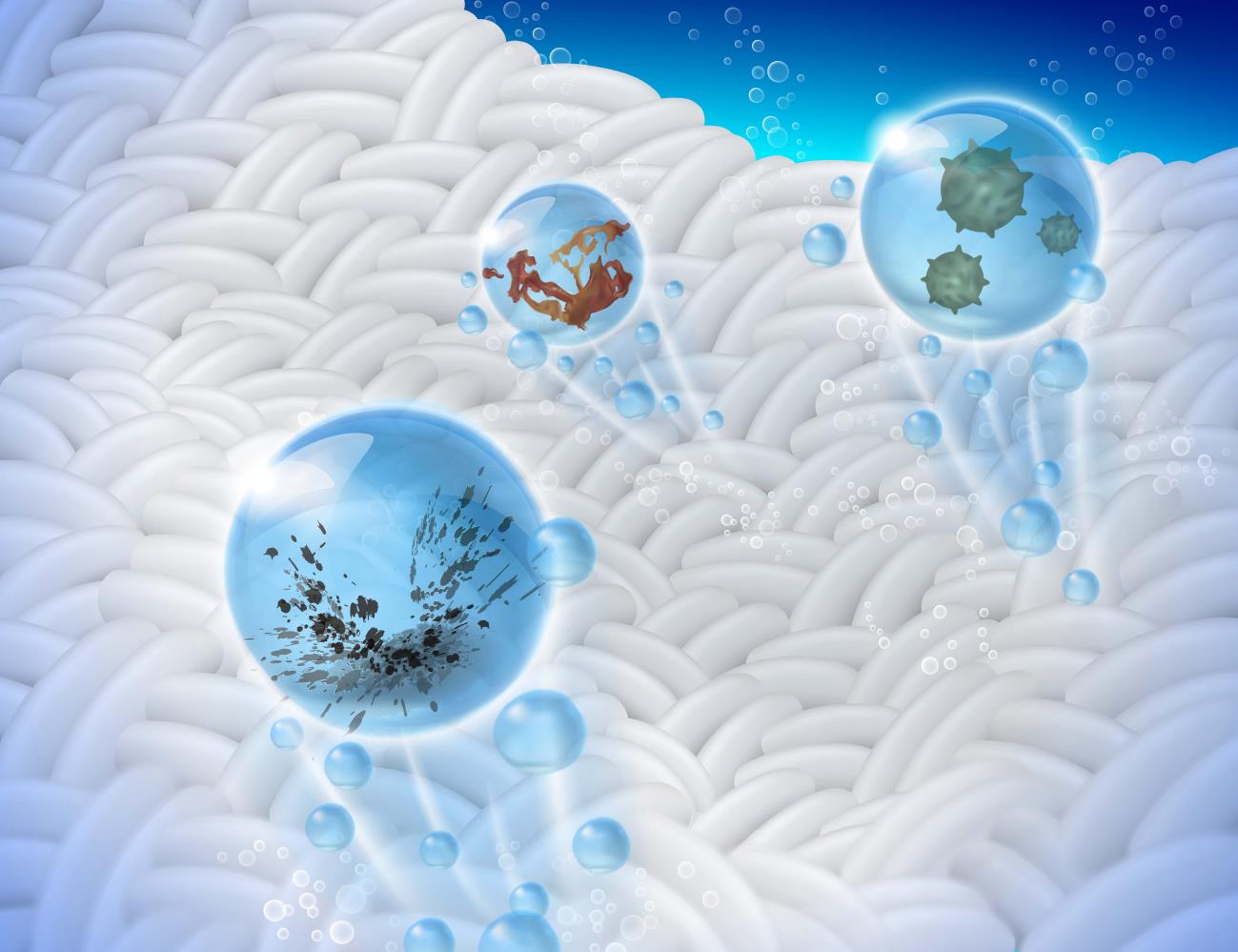
Legacy systems, particularly sulfate-based surfactant platforms, have long served as the benchmark in cleansers and shampoos because they combine strong cleansing, rich foam, and robust viscosity build with relatively predictable formulation behavior. These systems have been foundational in personal care for decades, which has allowed formulation strategies, processing methods, and performance expectations to become highly standardized.
By contrast, many newer sulfate-free, amino-acid-based, and bio-based systems do not reproduce that behavior as readily. They often exhibit weaker or slower rheological response and greater sensitivity to composition, pH, salt, and co-surfactant selection, which makes performance less predictable during development. As a result, these materials generally cannot be treated as direct one-to-one replacements for legacy surfactants but instead require reformulation of the broader system.
The central formulation challenge is therefore not simply the replacement of individual ingredients, but the ability to achieve equivalent or improved performance using systems that do not inherently provide it. Formulators must now simultaneously balance mildness, sustainability, and regulatory compliance with cleansing efficacy, foam quality, rheological structure, and sensory performance. In many cases, these objectives are in direct tension, and improvements in one dimension can degrade performance in another.
Formulation Challenges
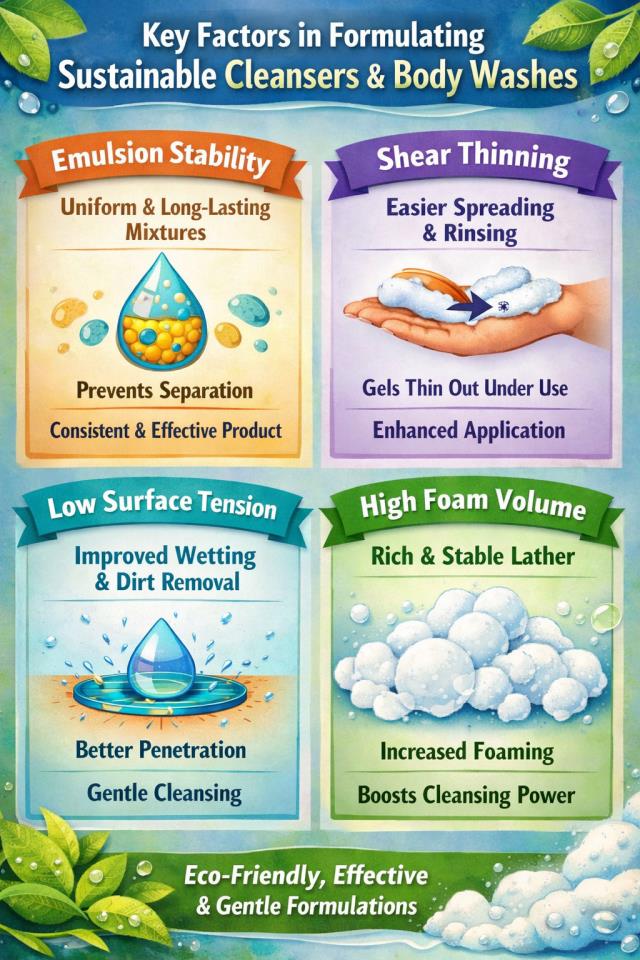
Cleansers, body washes, and shampoos are complex multicomponent formulations in which the surfactant system plays a central role in determining cleansing performance, foaming behavior, viscosity, and overall sensory profile. However, these properties are not governed by surfactants alone. They emerge from interactions between surfactants and other formulation components such as polymers, polyelectrolytes, conditioning agents, oils, fragrances, and preservatives. In addition, formulation conditions including pH, ionic strength, and temperature can significantly influence phase behavior and, in turn, product performance.
Over several decades, the performance of traditional systems has been extensively optimized through a combination of empirical formulation work and mechanistic understanding. Widely used surfactant systems, particularly those based on sulfate chemistries and their combinations with amphoteric co-surfactants, have well-established design rules that allow formulators to reliably control foam, viscosity, and stability across a wide range of conditions. This accumulated knowledge has enabled a high degree of predictability and standardization in formulation development.
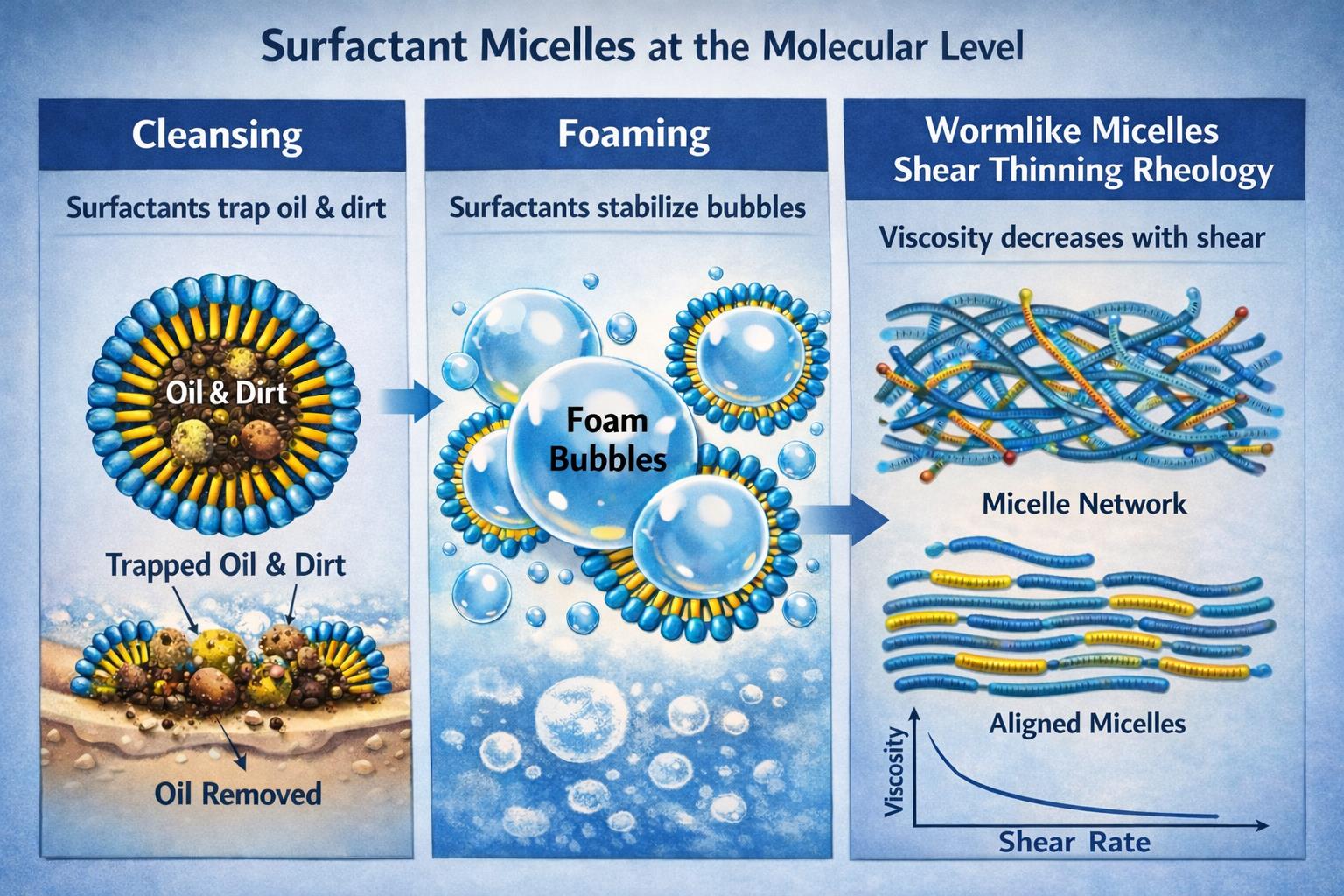
In contrast, the introduction of newer ingredient platforms such as biosurfactants, bio-based surfactants, and biopolymers disrupts these established design frameworks. These systems often exhibit different interaction patterns and phase behavior, which can lead to reduced or inconsistent performance in areas such as viscosity build, foaming, and stability. As a result, formulation strategies developed for traditional systems do not readily transfer, and direct substitution of ingredients rarely produces equivalent results.
This creates a fundamental challenge: the industry is effectively required to rebuild decades of formulation knowledge for new material systems, but under significantly tighter time constraints. Regulatory pressures, sustainability goals, and evolving consumer expectations are accelerating the pace of change, reducing the feasibility of relying solely on traditional trial-and-error approaches. This has created a clear need for more predictive and data-driven approaches to formulation design.
The Opportunity for Predictive Formulation
Reformulation of cleansers, body washes, and shampoos is inherently challenging and resource-intensive, often requiring extensive trial-and-error in the lab. This is where predictive formulation approaches can play an important role in the formulator's workflow.
Modern surfactant systems introduce a tightly coupled, multi-variable problem:
- Surfactant composition affects viscosity and rheological structure
- Rheology and shear-rate response determine texture, pourability, and sensory feel
- Surface activity governs foaming behavior and cleansing performance
- Stability and phase behavior influence product consistency and shelf life
- Foam structure and stability influence consumer perception and product efficacy
- Additives such as polymers, salts, and conditioning agents impact all the above
The objective of AI and predictive analytics is not to replace experimental work, but to reduce blind iteration and prioritize the most promising candidates. As formulations are tested and refined, these models can be continuously improved, allowing for increasingly accurate predictions across new systems.
Some companies are turning towards general-purpose AI models, such as LLMs, for this task. However, these models are not designed to capture the underlying physicochemical behavior required for formulation prediction, and therefore must be complemented by domain-specific, chemistry-aware approaches for actual formulation predictions.
For organizations developing next-generation cleansers and shampoos, this approach can make formulation development more targeted, faster, and more resource-efficient, particularly in systems where traditional formulation knowledge is less directly applicable.
Takeaways
The development of next-generation cleansers, body washes, and shampoos is often framed as an ingredient substitution problem. That framing is incomplete without recognizing the underlying formulation challenges.
At a deeper level, the shift toward sulfate-free, bio-based, and more sustainable systems introduces new physicochemical constraints that redefine how performance is achieved. In this environment, properties such as rheology, shear-rate response, foaming behavior, and stability are not independent targets, but tightly coupled variables that must be engineered together.
The companies that succeed will not simply adapt to legacy formulations. They will design systems specifically for these new constraints, leveraging predictive tools to accelerate development and reduce reliance on trial-and-error experimentation.
References
- Grand View Research. Face Wash and Cleanser Market Size and Forecast (2025–2033).
- Fortune Business Insights. Bath and Body Soap Market Size, Share & Growth Analysis.
- Grand View Research. Hair Care Market Size, Share & Trends Analysis (2025–2033).
- Grand View Research. Sulfate-Free Shampoo Market Size and Forecast.
- MarketsandMarkets. Biosurfactants Market Size, Share & Industry Analysis (2025–2030).
- Akin-Ige, F.; Amin, S. Stimuli-Responsive Bio-Based Surfactant-Polymer Gels.
- Drakontis, C. E.; Amin, S. Biosurfactants: Formulations, Properties, and Applications.
- Virka, A. S.; Virka, S. S.; Hesami, M.; Dubbelman, S.; Kummerow, G.; Posner, C.; Amin, S. Rheological Dynamics of Sulfate-Free Surfactant Systems.
- Yorke, K.; Amin, S. High Performance Conditioning Shampoo with Hyaluronic Acid and Sustainable Surfactants.
- Ajayi, O.; Davies, A.; Amin, S. Impact of Processing Conditions on Rheology, Tribology and Wet Lubrication Performance of a Novel Amino Lipid Hair Conditioner.
- Yorke, K.; Potanin, A.; Jogun, S.; Morgan, A.; Shen, H.; Amin, S. High-Performance Sulphate-Free Cleansers: Surface Activity, Foaming and Rheology.