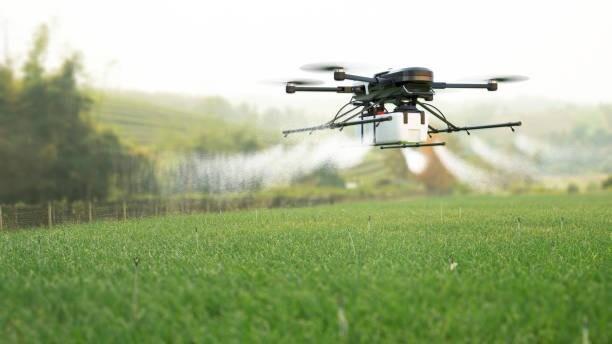
Agricultural drones are moving from early experimentation toward practical deployment in precision crop protection. While still an emerging category, growth is accelerating rapidly and is being driven by clear operational advantages.
Market trajectory
- Estimated $2.63B market in 2025, projected to reach $10.76B by 2030
- Implies ~32.6% CAGR, reflecting strong adoption across agriculture applications
- Crop spraying is one of the primary commercial use cases driving this growth
Why growers are adopting drone spraying
- Targeted application: enables site-specific treatment and reduced chemical waste
- Access to difficult terrain: effective in orchards, vineyards, wet fields, and fragmented land
- Reduced soil compaction: eliminates heavy equipment impact
- Faster response times: enables spraying in tight weather or disease windows
Operational and regulatory tailwinds
- Labor constraints: increasing pressure to automate field operations
- Efficiency requirements: need to reduce input costs and improve application precision
- Regulatory clarity improving: FAA Part 137 framework continues to mature for aerial dispensing
Where adoption is strongest (near-term)
- Specialty crops and high-value applications
- Fields with limited accessibility for ground rigs
- Use cases where precision outweighs raw acreage throughput
However, the most important technical implication is often understated: drone spraying fundamentally changes the formulation problem.
A formulation that performs adequately in a conventional spray program may behave very differently when delivered through a drone system. Compared to traditional ground rigs, drones operate under tighter constraints: lower spray volumes, limited payload capacity, compact fluid systems, and restricted nozzle options. In some cases, label-recommended spray volumes exceed what drone systems can deliver, creating an inherent mismatch between formulation design and delivery platform.
As a result, drone-based agrochemical delivery is increasingly a reformulation challenge, not simply an application-method shift.
A Different Delivery Regime
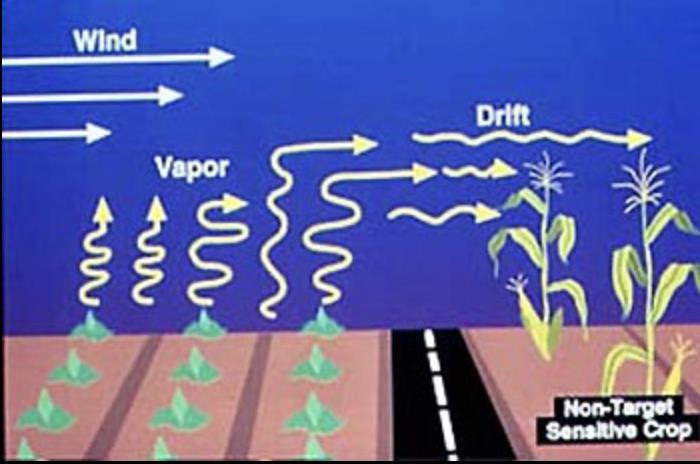
Drone spraying operates under a distinct physical regime. Lower carrier volumes push formulations toward higher concentrations. Smaller tanks and payload limits increase the need to maximize performance per unit volume. Rotor-induced airflow alters droplet formation and transport. Compact spray systems are less tolerant of formulations with poor flow behavior or instability.
In practical terms, formulators must simultaneously satisfy several competing requirements:
- High enough concentration for low-volume delivery
- Low enough viscosity for reliable pumping and atomization
- Droplet sizes large enough to reduce drift but small enough to maintain coverage
- Stability under concentrated conditions and tank-mix scenarios
- Robust performance under rotor downwash and turbulent airflow
These constraints define a narrow operating window. Within that window, formulation properties become primary drivers of success rather than secondary considerations.
The Importance of Viscosity
Among all formulation variables in drone-based agrochemical delivery, viscosity is one of the most critical because it sits at the center of the entire delivery physics chain.
It directly influences:
- Atomization at the nozzle or rotary atomizer
- Droplet-size distribution
- Drift potential
- Canopy deposition
- Leaf coverage
- Flow rate and dosing consistency
- Overall operational throughput
In other words, viscosity does not just affect whether a formulation sprays. It helps determine how well it sprays, where it lands, how uniformly it covers the target, and how efficiently the system performs in the field.
Fine droplets can improve apparent coverage, but they are also much more vulnerable to drift, especially under low-altitude flight conditions and rotor-induced airflow. Larger droplets are more resistant to drift, but if droplet size becomes too large, coverage suffers and efficacy may decline because the spray is no longer distributed evenly across the target surface.
Viscosity also shapes the balance between spray drift and target deposition
- If viscosity is too low, droplets become excessively fine and are more easily carried off target by wind and rotor turbulence
- If viscosity is too high, droplets may resist drift but can become too large, too localized, or less effective in spreading across the leaf surface
Drone sprayers have limited payload, limited onboard power, and limited tolerance for inefficient fluid handling. As viscosity increases:
- Pump energy demand rises
- Flow rate can decline
- Dosing consistency becomes harder to maintain
- Effective area covered per flight can decrease
Drone systems may use hydraulic nozzles or rotary atomizers, and the interaction between fluid properties and atomization hardware is critical. Viscosity affects:
- Breakup mechanism
- Droplet uniformity
- Tendency toward fine misting versus coarse droplets
- Clogging risk
- Consistency of spray output
Even when rotary atomizers are more tolerant than some hydraulic systems, the formulation still must be matched to the device. If viscosity is too high, filament formation and uneven droplet generation can become a problem. If it is too low, the spray may shift toward excessively fine droplets and elevated drift risk.
This challenge becomes more acute because drone delivery trends toward ultra-low-volume application and higher-concentration formulations.
That creates a built-in tension:
- Higher concentration improves logistics and reduces refill frequency
- But increasing concentration often increases viscosity
- Increasing viscosity can make atomization, coverage, and flow control more difficult
- Increasing concentration can lead to more challenges in colloidal stability
This is one of the most important reasons drone delivery drives reformulation. A product that works in a more dilute conventional application system may not remain sprayable, stable, or effective when reformulated for concentrated drone use.
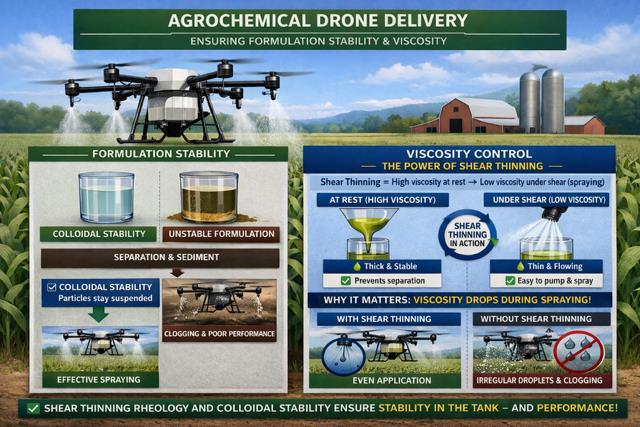
For this reason, the most useful way to think about the problem is not simply static viscosity, but how the formulation behaves across different shear conditions. The majority of structured formulations and high concentration formulations exhibit shear thinning characteristics, which means the viscosity is not constant at different at different shear rates, but actually reduces with shear.
A shear-thinning formulation can be especially attractive:
- Higher viscosity at rest can support stability in the tank
- Lower viscosity under shear can improve pumping and atomization during spraying
- After deposition, higher structure can help reduce runoff and improve retention
It is not a single viscosity value, but the entire viscosity vs shear rate profile which will impact multiple performance attributes from stability during storage to effective atomization to final retention on the crop.
Stability Is Not Just a Shelf-Life Issue
In addition to viscosity, colloidal stability is crucial for drone-based spraying systems.
Drone delivery trends toward concentrated formulations amplify stability challenges. Reduced dilution increases the likelihood of:
- Phase separation
- Sedimentation
- Creaming
- Emulsion breakdown
- Tank-mix incompatibility
In drone systems, instability can quickly translate into:
- Nozzle blockage
- Irregular dosing
- Nonuniform field coverage
- Operational downtime
Because drone systems rely on smaller tanks and tighter operational cycles, there is less tolerance for poorly behaved formulations. Uniformity of the fluid becomes directly tied to uniformity of application.
Tank-mix compatibility is particularly critical. Operators frequently combine actives and adjuvants under field conditions, and incompatibilities can lead to precipitation, foaming, or unstable flow behavior. Extension guidance consistently highlights that compatibility issues are common even in conventional spraying, and are amplified in more constrained systems.
Why Reformulation Pressure Will Increase
Over the next several years, drone spraying is likely to expand as part of broader precision agriculture workflows rather than replacing conventional systems outright.
The strongest adoption will likely occur in:
- Specialty crops
- Difficult terrain
- Fields with access limitations
- Situations requiring precise, localized application
As adoption increases, expectations around performance will rise. Applicators and manufacturers will increasingly require formulations that are:
- Optimized for low-volume delivery
- Consistent across varying environmental conditions
- Compatible with compact spray systems
- Robust under operational stress
Legacy formulations designed for conventional spraying will not meet these requirements without modification, increasing the need for reformulation.
The Opportunity for Predictive Formulation
Reformulations are challenging and time/resource intensive, often requiring extensive trial-and-error in the lab. This is where predictive formulation approaches become valuable for formulators' workflow.
Drone delivery introduces a tightly coupled, multi-variable problem:
- Concentration affects viscosity
- Shear-thinning affects atomization
- Stability and shear-thinning affects sprayability
- Adjuvants influence all of the above
Traditional development approaches often rely on iterative wet-lab testing across this multidimensional space. Predictive tools, such as digital twin viscometers and formulation stability predictors, can help explore the space more fully earlier in development.
With this workflow, the goal is not to replace experimentation, but to reduce blind iteration and prioritize candidates more effectively. Throughout the iteration process, predictive tools can continuously improve and make better predictions about new formulations.
For organizations adapting products to drone delivery, this shift can make formulation development more targeted, faster, and more resource-efficient.
Takeaways
Drone-based agrochemical delivery is often framed as an equipment innovation. That framing is incomplete without understanding the added formulation challenges.
At a deeper level, drone spraying introduces a new set of physical constraints that redefine what a "sprayable" formulation must be. In this environment, viscosity and stability have different requirements that are central to performance.
The companies that succeed will not simply adapt existing products. They will design formulations specifically for the physics of drone delivery, using predictive tools to speed up formulation development.
References
- MarketsandMarkets, Agriculture Drones Market Forecast (2025–2030).
- FAA, Dispensing Chemicals and Agricultural Products (Part 137).
- Purdue University Extension, Current Challenges of Using Spray Drones.
- Peer-reviewed UAV spraying studies on droplet size, drift, and coverage.
- Virginia Tech Extension, Understanding Spray Tank Mixing Practices.
- USDA ARS, Rotor Wash Effects on Droplet Behavior in UAV Spraying.